
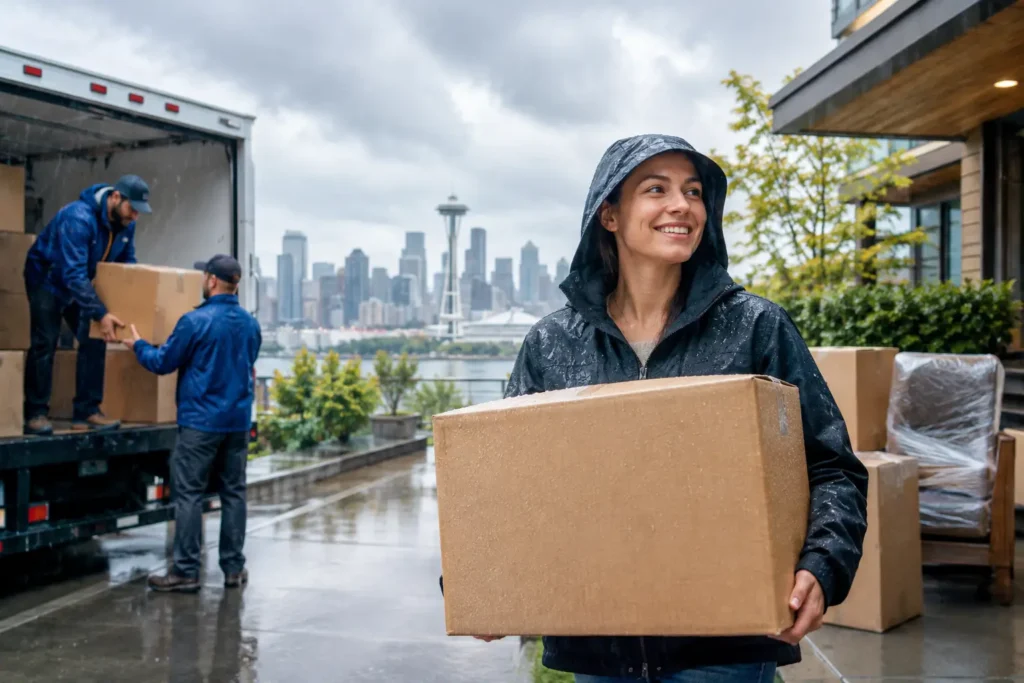
Seattle rain does not always arrive as a dramatic storm. More often, it is the steady drizzle that soaks cardboard, makes apartment hallways slick, and turns a quick truck unload into a longer job. This Seattle rain moving protection guide focuses on the choices that keep your belongings dry, protect the building, and help your moving day stay calm even when the forecast looks gray.
The goal is not to wait for a perfectly sunny weekend. In Seattle, that could mean waiting a while. The better plan is to prepare for wet conditions, move with a clear order, and get the right amount of hands-on help for the heavy items.
1. Protect the items that hate water most
Cardboard is the first concern. A box can look fine on the outside while its bottom gets soft enough to give way halfway down a stairwell. Reserve plastic totes, sealed bins, suitcases, and sturdy bags for electronics, documents, books, framed photos, medications, and anything else that would be difficult or expensive to replace.
For cardboard boxes, use quality packing tape across both seams on the bottom, not just one strip down the middle. Avoid overfilling boxes, since heavy boxes are more likely to flex and break when damp. Label at least two sides with a dark permanent marker so the writing stays readable if a box gets wet.
Furniture needs its own protection. Wrap upholstered pieces in moving blankets, then use plastic stretch wrap or furniture bags as an outer rain barrier. The order matters: blankets cushion the item, while plastic helps block moisture. Plastic directly against certain wood finishes or leather for a long period can trap moisture, so remove it once the furniture is inside and dry.
2. Keep rain protection near the truck door
A common moving-day mistake is packing tarps, towels, and tape deep inside the truck. Put a small weather kit in the cab or right by the entrance instead. You should be able to reach it before the first box comes out.
Your kit does not have to be complicated. Keep several clean moving blankets, plastic wrap, a tarp, absorbent towels, packing tape, box cutters, work gloves, and a couple of large trash bags together. Trash bags are especially useful for covering lampshades, small furniture, and open-top containers during the short walk between the building and truck.
A tarp is helpful as temporary coverage, but do not drag furniture across it or use it as a slippery ramp. It can create more risk than protection. Use it to cover staged items or protect a dry loading zone when conditions allow.
3. Create a dry staging area before unloading
In a Seattle apartment move, the distance from the truck to your front door may be short, but the route can include wet sidewalks, elevator lobbies, parking garages, and narrow hallways. Before unloading, decide where each load will land first.
At the new place, clear a dry area just inside the door for incoming boxes. Lay down flattened cardboard, old towels, or floor runners if the building permits it. This protects floors from wet shoe traffic and prevents boxes from sitting directly on a damp surface.
If you are moving into a building with an elevator, ask management ahead of time about loading access, reserved elevator times, floor protection rules, and parking instructions. A few minutes of rain exposure is manageable. Losing your loading zone or waiting an hour for an elevator makes everything harder.
4. Load the truck with weather and weight in mind
Rain changes the smartest loading order. Put the most water-sensitive belongings deeper inside the truck, away from the door. Use moving blankets and straps to create a secure load so items do not shift when you open the truck on a sloped or wet Seattle street.
Keep durable, easy-to-carry items closer to the rear when possible. That may include plastic bins, bagged linens, and sealed items that can handle a brief trip through drizzle. Do not place loose mattresses, unwrapped upholstered furniture, or exposed electronics at the back of the truck.
There is a trade-off here. Packing a truck for perfect unloading order can conflict with packing it safely. When you have to choose, prioritize a stable, well-secured load. A little extra walking is better than damaged furniture or a box falling because the truck was loaded too loosely.
5. Make the walking path safer, not faster
Wet pavement, metal ramps, and apartment stairs deserve more caution than usual. Wear shoes with good traction and avoid carrying loads so large that you cannot see where you are stepping. Take smaller loads when the route is slick, especially for stairs and uneven sidewalks.
Keep the path clear of loose plastic, tape, and wet blankets. Those small items become trip hazards quickly. If rain is coming down hard, it can be smarter to pause for ten minutes, regroup, and cover staged belongings than to rush through a dangerous stretch.
This is where labor-only moving help can make a real difference. Experienced hands can keep a steady pace with heavy furniture while you focus on directing boxes, checking the apartment, and keeping the route clear. College Movers provides motivated local college students for loading, unloading, apartment moves, and heavy lifting at $50 per hour per mover. You provide the truck or storage container, and the crew provides the muscle and careful handling.
6. Do not leave belongings on the curb
Even covered items can collect water around the edges when they sit outside. Move belongings from the home to the truck in a steady flow instead of building a large pile on the sidewalk. The same rule applies at your destination: bring items indoors first, then organize rooms.
If a short staging period is unavoidable, keep boxes raised off wet pavement on a tarp, pallet, or dry cardboard. Cover them fully, including the sides, and do not assume a blanket alone will stop rain. Moving blankets absorb water, which is useful for padding but not for weatherproofing.
7. Check items as soon as they come inside
Once you are under cover, remove wet outer wrapping and inspect furniture, boxes, and electronics. Wipe down hard surfaces, stand damp boxes apart so air can circulate, and unpack anything that feels soft or wet at the bottom. Waiting until the next day can allow moisture to spread to books, clothing, or wood furniture.
For mattresses and upholstered pieces, take off plastic covers promptly and let them air out in a warm, ventilated room. If a rug got wet, unroll it and dry both sides rather than leaving it rolled up. A little attention immediately after the move can prevent mildew and lingering odors.
8. Build extra time into your Seattle moving plan
Rain rarely stops a move, but it does slow down the work. Plan a buffer for wet walkways, elevator trips, extra wrapping, and careful loading. If you are booking a truck by the hour, add enough time that nobody feels pressure to rush the final load.
It also helps to schedule your toughest items early. Get dressers, beds, couches, and large appliances handled while everyone has energy and before the day gets wetter. Save lighter boxes and indoor organizing for later.
When should you reschedule a rainy move?
Light rain or drizzle is usually manageable with preparation. Rescheduling makes more sense when there are unsafe winds, flooding, icy conditions, poor visibility, or a route that becomes hazardous. If your building has an exposed stairway or a steep driveway, your threshold for postponing may be lower.
For most Seattle moves, though, the answer is not cancellation. It is better packing, clear staging, dry floor protection, and enough reliable help to handle the job without cutting corners.
If your truck, POD, or trailer is ready and you need affordable lifting help, College Movers can send hardworking student movers to help load, unload, and protect the heavy items that make rainy moving days stressful. A little preparation and a careful crew can turn a wet Seattle move into a manageable one.