
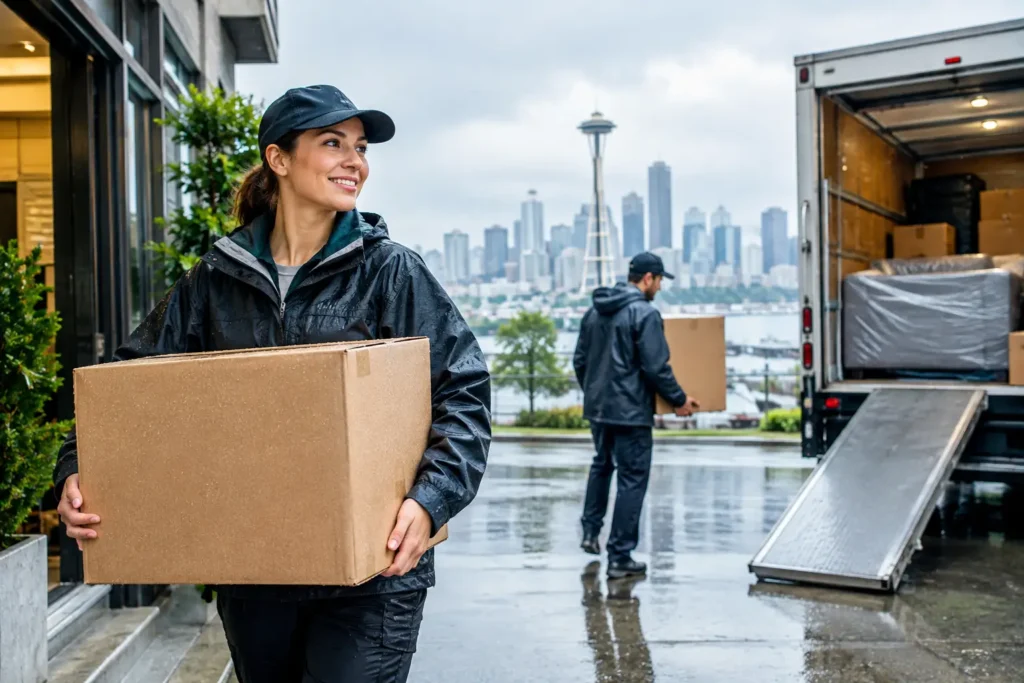
A Seattle forecast can show rain all week, and your lease end date usually will not wait for a sunny break. Seattle rainy day moving is completely manageable when you plan for wet sidewalks, slick stairwells, limited curb space, and the extra time it takes to protect your home and belongings.
The goal is not to pretend the rain is not there. It is to control where the water goes, keep the walking path safe, and make sure the truck is loaded in a way that protects what matters most. A little preparation can save you from a soaked mattress, muddy apartment carpet, or a stressful move-day scramble.
Start With a Rain Plan, Not a Weather App Refresh
Seattle rain often arrives as a steady drizzle rather than a dramatic storm. That can make it easy to underestimate. After an hour of loading boxes, a light rain can still soak cardboard, turn entryways slippery, and leave water trapped under furniture pads.
Check the forecast the evening before and again on moving morning, but do not build your entire plan around the hope of a dry two-hour window. Instead, choose a loading area close to the entrance, clear the path from door to truck, and decide where wet shoes, umbrellas, and damp moving blankets will go.
If you are moving out of an apartment in Capitol Hill, Ballard, Fremont, or downtown Seattle, contact building management ahead of time. Ask about loading zones, freight elevator reservations, elevator protection requirements, and whether you need to reserve a move-in or move-out time. Rain makes every trip between the unit and truck take a little longer, so a tight elevator reservation deserves extra attention.
Protect the Things Rain Can Ruin
Cardboard boxes are useful, affordable, and easy to stack. They are also not waterproof. The bottom corners can weaken quickly when a box sits on a wet sidewalk or truck ramp.
Use plastic bins for items that cannot get wet, such as electronics, important documents, medications, photographs, and valuable keepsakes. For boxed items, heavy-duty tape across the bottom seams helps, but it is not a substitute for keeping boxes out of standing water. Set boxes on a tarp, furniture pad, or dry section of the truck instead of directly on the pavement.
Mattresses, upholstered furniture, and wood pieces need extra care. Mattress bags are worth using on a rainy move, especially when a mattress must travel through a shared hallway or sit near an open truck door. Cover sofas and chairs with plastic wrap or protective covers, then use moving blankets on top when needed. The plastic keeps out moisture while the blanket helps prevent scuffs during loading.
Electronics should be packed in sealed plastic bags or bins inside a box whenever possible. Label them clearly so they are loaded quickly and do not wait outside. If you have a TV, computer monitor, or gaming system, make it part of the first load into the truck and one of the first items inside at the new place.
Create a Safe, Dry Path From Door to Truck
Rain changes the biggest risk of moving day: footing. A damp exterior stairway, a smooth apartment lobby floor, or a steep Seattle driveway can become slippery fast when people are carrying dressers and boxes.
Before the first item moves, walk the full path. Remove loose mats, hoses, planters, toys, and anything else that could catch a foot or block a hand truck. Keep the truck ramp as dry as possible, and use a towel or old blanket to wipe it down as needed. If your building allows it, place towels just inside the entry to protect floors and reduce tracked-in water.
Do not rush heavy items because of the rain. Carrying a couch down wet stairs requires slower steps, clear communication, and enough people for the job. If conditions are more than a normal drizzle, it can make sense to pause for a few minutes during the heaviest burst rather than force a difficult carry.
Seattle homes also come with their share of narrow staircases, split-level layouts, and hillside entrances. Measure larger furniture before move day if the path looks tight. Rain is not the time to discover that a sectional needs its legs removed or that a dresser will not clear a turn in the stairwell.
Load the Truck With Weather in Mind
A good truck load is about stability first, but wet weather adds another priority: reducing time with the cargo area open. Have your boxes grouped by room before the crew arrives, and keep fragile or moisture-sensitive items near the door rather than scattered around the home.
Load large furniture and appliances first, securing them against the front wall of the truck. Use furniture pads and straps so pieces do not shift. Then bring in boxes, keeping the heaviest ones low and filling open spaces to prevent movement. Keep a small protected area near the truck entrance for items that should not sit outside, such as electronics and labeled essentials boxes.
Avoid packing a wet moving blanket directly against wood furniture for a long drive. If a blanket gets damp, swap it out or place a dry barrier between it and the furniture. For a local Seattle move, this may be a small concern. For a longer move across Washington or beyond, trapped moisture has more time to cause problems.
Give Yourself More Time Than a Sunny-Day Move
Rain does not necessarily double the length of a move, but it almost always adds a few minutes to each trip. People walk more carefully, floors need occasional wiping, and boxes need to be staged with more care. That is especially true in apartment buildings with elevators and long hallways.
Build in a buffer rather than scheduling every part of the day back-to-back. If you have cleaners arriving, keys to return, or a storage unit to visit, leave room for the unexpected. You will feel far more in control if the move runs 30 minutes longer than expected without putting the rest of your day behind.
This is also where labor-only help can make a real difference. If you have rented your own truck, reserved a POD, or borrowed a trailer, College Movers can provide motivated local college students to handle the heavy lifting, loading, unloading, and in-home moving work. You keep control of the truck and schedule while getting help with the physically demanding part.
College Movers charges $50 per hour per mover, with straightforward pricing and no hidden fees. That can be a practical option for renters, students, and families who need reliable hands without paying for a full-service moving package they do not need.
Keep a Small Rain-Ready Moving Kit
Put your move-day basics in one bag or tote that stays with you, not in the truck. You will want towels, a roll of paper towels, work gloves, trash bags, a utility knife, tape, and a phone charger. Add dry socks and a change of shoes if you are likely to be walking in and out of a wet loading area all day.
A few large trash bags can be surprisingly useful. They can cover a box temporarily, hold wet towels, protect a car seat, or separate damp items from dry ones. Keep umbrellas available, but remember that an umbrella is not useful when both hands are carrying a box. Focus more on covered staging areas and proper protective wrapping.
When It Makes Sense to Reschedule
Normal Seattle rain is usually no reason to cancel. High winds, flooding, ice, unsafe visibility, or a building entrance with dangerous standing water are different situations. Safety should win over a lease deadline when conditions are truly hazardous.
If rescheduling is not possible, reduce the risk by moving in shorter blocks, using extra protection, and skipping nonessential items until conditions improve. You may be able to move the bulk of the apartment safely, then return for patio furniture, garage items, or lower-priority boxes another day.
Make Your Rainy Move Easier
A wet forecast does not have to mean a miserable move. Pack with moisture in mind, clear a safe route, protect the truck load, and allow enough time for careful work. With the right preparation, Seattle rain becomes one more detail to manage instead of the thing that ruins your day.
If you already have a truck, trailer, or moving container and need help doing the heavy lifting, College Movers is ready to help make your Seattle move easier. Book affordable moving labor at $50 per hour per mover and put hardworking local students on the job while you focus on getting settled.