
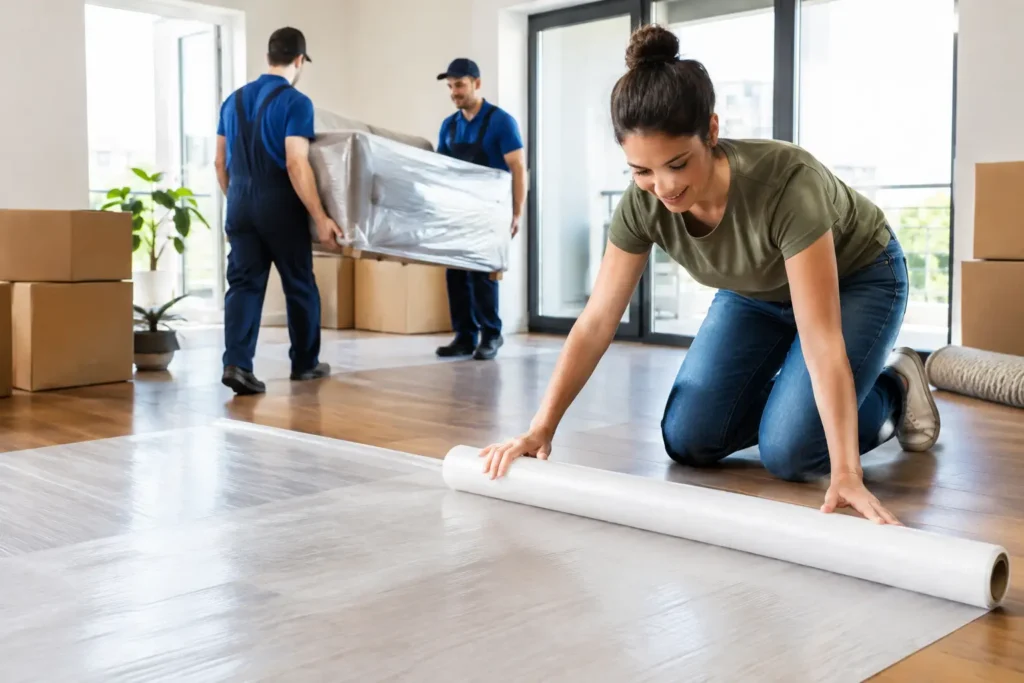
A scratched hardwood hallway or a muddy carpet path can turn an otherwise smooth move into a frustrating conversation about your security deposit. Learning how to protect rental floors is one of the simplest ways to leave your apartment or house in good shape, especially when furniture, dollies, boxes, and several people are moving through the same doorway all day.
The good news is that most floor damage is preventable. A little preparation protects the rental, keeps the move safer, and helps you avoid last-minute cleaning or repair costs. Whether you are leaving a downtown Austin apartment, moving out of student housing, or rearranging heavy furniture in a rental home, start by protecting the routes people will use most.
Start With the Walkway, Not the Furniture
Before the first box comes inside, look at the path from the truck, POD, or trailer to the room where items are going. That includes sidewalks, stairs, entryways, hallways, elevators, and the rooms where large furniture will be placed.
The highest-risk areas are usually the front door, narrow hallways, and corners. These are where wet shoes, rolling wheels, and bulky furniture are most likely to leave marks. Decide on one main traffic route rather than letting people take different paths through the home. A clear route makes the day faster and limits wear to one protected area.
If rain, snow, or mud is possible, have old towels or absorbent mats ready outside and just inside the entrance. Ask everyone to wipe their shoes before coming in. It sounds basic, but grit trapped under a shoe can scratch wood and laminate faster than most renters expect.
Use the Right Floor Protection for Each Surface
Not every floor needs the same protection. The best approach depends on what is underfoot and how much traffic you expect.
Hardwood, laminate, and vinyl floors
Hard surfaces are most vulnerable to scratches, dents, and scuff marks. Cover major walkways with clean moving blankets, cardboard, or reusable floor runners. Tape protection only at the edges, and avoid putting strong tape directly on a finished wood surface. It can pull up finish or leave sticky residue behind.
Furniture pads work well for short routes, particularly through a hallway or living room. For a larger move, heavy-duty floor runners are worth considering because they are less likely to bunch up underfoot. Whatever you use, keep it flat. Loose, folded blankets can become a tripping hazard when someone is carrying a dresser.
Carpet and rugs
Carpet collects dirt quickly, especially in apartment buildings where a rainy sidewalk or parking lot is part of the moving route. Use a plastic carpet film designed for temporary floor protection if you have it. It sticks lightly to carpet and creates a clean walkway from the entrance to the main rooms.
For a smaller move, runners, mats, and towels can still help. Just change them when they get damp or dirty. Do not use thin plastic sheeting that slides around easily. Saving a few dollars is not worth someone losing their footing while carrying a mattress or box.
Tile and stone
Tile can handle more than hardwood, but it is slippery when wet and can chip if furniture is dropped. Put runners over the main path and take extra care around corners and transitions between rooms. If you are moving a refrigerator, washer, or other heavy appliance, never drag it across tile.
Protect Floors From Furniture Damage
The biggest floor damage often happens at the moment furniture is set down, not while it is carried. A couch leg, bed frame, or metal filing cabinet can gouge a floor if it lands hard or gets dragged into place.
Use furniture sliders under heavy pieces when moving them across a room. Choose sliders made for the floor type: felt or soft sliders for hard floors and plastic sliders for carpet. For furniture that will stay in place after the move, place felt pads under legs and corners. They are inexpensive, take seconds to apply, and reduce future scratches when a chair or table gets bumped.
Do not drag loaded dressers, bookcases, or appliances. Empty drawers and shelves first, then lift or use a dolly correctly. If something is too heavy to safely lift, more hands are usually cheaper than repairing a damaged floor or dealing with an injury.
Keep Dollies and Carts Under Control
Dollies are useful, but they can be hard on rentals when used carelessly. Check the wheels before bringing one indoors. Small rocks, hardened mud, or damaged wheels can leave scratches on hard surfaces. Wipe wheels down if they have rolled through a parking lot, garage, or wet sidewalk.
Use a dolly on a protected path whenever possible. Avoid sharp turns on hardwood or vinyl, and do not park a loaded dolly in one place for long on soft vinyl flooring. The weight can leave an impression, especially in warm weather.
Apartment moves add another challenge: elevators and shared hallways. Many buildings require elevator pads or protective coverings during scheduled move times. Check with your property manager a few days ahead. If the building has rules, following them protects both the common areas and your move-out timeline.
Plan for the Weather and Building Rules
A move in Phoenix may bring dust and heat, while a Seattle move may mean wet shoes and damp boxes. The details change by city, but the basic plan stays the same: protect the route, keep moisture outside, and do not rush heavy items through tight spaces.
If rain is in the forecast, stage boxes as close to the entrance as possible and cover items in the truck before unloading. Keep a stack of dry towels ready. Wet cardboard can break apart, leaving dirt and debris behind, while wet furniture pads can transfer moisture to carpet or wood.
Also review your lease before move day. Some landlords require tenants to reserve loading areas, use specific entrances, or provide proof of insurance from moving companies. Others charge for wall, elevator, or hallway damage. Knowing those rules early gives you time to prepare instead of improvising with a truck parked outside.
Clean as You Go
A clean moving route is easier to protect than one covered in packing paper, loose tape, and empty boxes. Keep one bag or bin for trash near the door, and have someone make occasional quick passes through the home to pick up debris.
When the larger items are out, remove floor coverings slowly. Sweep or vacuum the route, then look over the floors in natural light. Take photos after the final cleanout, especially if the rental had existing scratches, stains, or worn spots when you moved in. Those photos can be useful if there is any question about your deposit later.
Get Moving Help Without the Heavy Lifting
Floor protection works best when the people moving your belongings have a plan and enough help. Trying to maneuver a sofa alone through a narrow apartment hallway is when dragging, dropped corners, and rushed decisions happen.
College Movers provides affordable labor-only help for loading, unloading, apartment moves, furniture rearranging, and heavy lifting. Our student movers can help you carry items carefully while you supply the truck and any floor protection you want to use. At $50 per hour per mover, you can add reliable hands without paying for a full-service moving package you do not need.
If you are preparing for a move, set out your runners, pads, and furniture sliders before the crew arrives. A ready-to-go path helps everyone work faster, protects the rental, and makes the day feel much more manageable.
Common Questions About Protecting Rental Floors
Can I use cardboard to protect hardwood floors?
Yes, clean flattened cardboard can work for light traffic, especially during a small move. Secure the edges so it does not slide, and replace it if it gets wet, torn, or dirty. For heavy traffic or rolling dollies, thicker floor runners or moving blankets are a safer choice.
Should I put tape directly on rental flooring?
Generally, no. Tape can leave residue or pull up finish, especially on older wood, laminate, and vinyl. Secure coverings to themselves or tape only along baseboards and other areas that will not damage the visible floor.
What should I do if I notice a scratch after moving?
Take a clear photo right away and compare it with your move-in photos. For small surface marks, a matching floor repair product may help, but avoid attempting a major repair without checking with your landlord. A well-intended fix can sometimes make the damage more noticeable.
Protecting the floor is not about making a move complicated. It is about giving heavy furniture, busy walkways, and unpredictable weather a little more respect before they cost you money.