
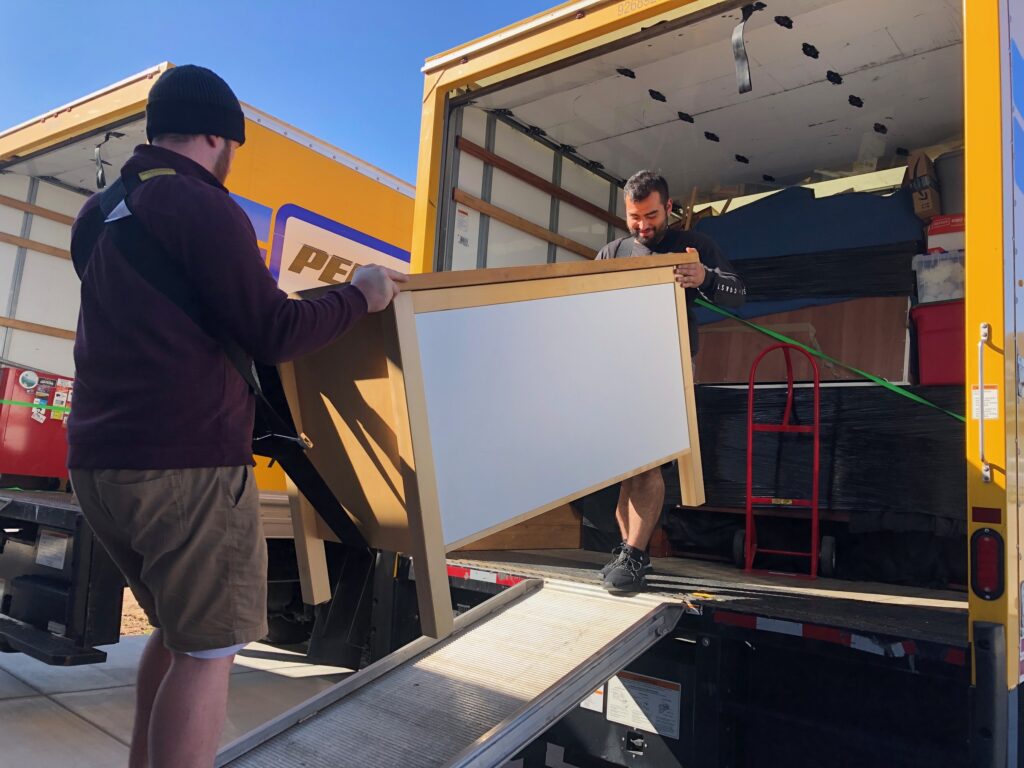
A refrigerator can look manageable until it is halfway through a narrow apartment doorway, tilted toward a wall, and suddenly much heavier than anyone expected. Knowing how to move bulky appliances is less about brute strength and more about planning the route, using the right tools, and knowing when an extra set of hands is worth it.
Quick answer: Measure the appliance and route first, disconnect it correctly, use an appliance dolly and straps, and stop if the load cannot be controlled safely. Heavy or awkward appliances are a good reason to add extra lifting help.
Whether you are moving out of a Phoenix apartment, rearranging a family home, or loading a rental truck for a long-distance move, appliances deserve their own plan. A scratched floor, damaged water line, or strained back can cost far more than a little preparation.

Start with the appliance and the route
Before anyone lifts, measure the appliance and every tight point between its current spot and the truck. That includes doorways, hallways, stair landings, elevator openings, gates, and the cargo opening on your truck or trailer. Remove obstacles from the path, including rugs, low tables, shoes, and boxes that can become a trip hazard.
Open doors along the route and secure them so they do not swing back into the moving path. If the appliance must go down stairs, make sure the stairs are dry, clear, and well lit. A route that works for a person may not work for a refrigerator on a dolly.
It also helps to measure early enough to avoid a frustrating surprise. If an appliance will not fit through a doorway, you may need to remove the door from its hinges, take off the appliance doors, or choose another exit. Do not force it through a tight opening. That is how door frames, appliance panels, and fingers get damaged.
Prepare the appliance before moving it
Every appliance has different requirements, but unplugging it is only the first step. A refrigerator needs more preparation than a dryer, while a washing machine may have hidden water in its hoses and pump.
For refrigerators and freezers, empty all food, shelves, and removable bins. Defrost them at least 24 hours ahead when possible, then dry the inside completely. Tape doors and drawers closed with painter’s tape or moving tape that will not leave residue. Refrigerators should usually travel upright. If one must be placed on its side, check the manufacturer’s guidance and allow it to stand upright for several hours before plugging it in at the new home.
For washers, disconnect the water supply, drain the hoses, and use the manufacturer-provided shipping bolts if you still have them. Those bolts protect the drum during transport. Disconnect dryers from power and venting, but leave gas-line disconnection to a qualified professional. The same rule applies to gas ranges, wall ovens, and any appliance with a hardwired electrical connection. Moving labor can handle the heavy lifting, but utility work should be done safely by the right pro.
Dishwashers, ice makers, and refrigerators with water dispensers may have supply lines that need to be shut off and drained. Take a few photos before disconnecting anything. They can save time when you are reconnecting the appliance later.
Get the right equipment for heavy appliances
A hand truck or appliance dolly is the main tool for moving large appliances. An appliance dolly has straps designed to secure tall, heavy items and a frame that gives the load better support. A basic furniture dolly may work for some items, but it is not always the safest choice for a tall refrigerator or stacked washer-dryer unit.
For a safer move, gather these items before you start:
- An appliance dolly with working straps
- Moving blankets or thick furniture pads
- Stretch wrap or tape for doors, cords, and loose parts
- Floor protection, such as cardboard, runners, or furniture sliders
- Work gloves with a solid grip
- Ratchet straps for securing appliances inside the truck
Moving blankets protect both the appliance and the walls. Floor protection matters even more in apartments, where one dragged corner can leave a noticeable mark on vinyl, hardwood, or hallway carpeting. In a building with an elevator, reserve it ahead of time if required and ask management about moving-hour rules.
How to move bulky appliances with a dolly
Place the dolly against the strongest, flattest side of the appliance. For most refrigerators, that means positioning it on the side rather than the front or back. Keep the appliance as upright as possible, wrap it in a blanket, and strap it tightly to the dolly. The straps should hold the load firmly without crushing handles, control panels, or fragile components.
One person should guide and stabilize from the top while another controls the dolly from below when moving over thresholds or down steps. Communicate before every change in direction. Simple calls such as “stop,” “clear,” “down,” and “rest” prevent rushed decisions when everyone is carrying weight.
Do not try to catch a falling appliance. Step away and let it settle if control is lost. A damaged appliance is frustrating, but an injured hand or foot is worse. Wear closed-toe shoes and avoid sandals, socks, or loose clothing that can catch on wheels or stair edges.
When moving down stairs, the strongest and most experienced person should be in the lower position controlling the descent. If the stairs are narrow, steep, or have a turn in the middle, this may be the point where professional moving labor makes the most sense. Some jobs are not difficult because the appliance is unusually heavy. They are difficult because the route leaves no room for error.
Protect the appliance in the truck
Once the appliance reaches the truck, secure it upright against a sturdy wall of the cargo area. Use ratchet straps anchored to the truck’s tie-down points. Do not rely on boxes, loose furniture, or hope to keep it from shifting during turns and braking.
Avoid placing heavy items on top of an appliance. Keep the load tight by filling gaps with mattresses, moving pads, or appropriately secured furniture. If you are loading a truck yourself, place the heaviest items toward the front of the cargo area to help keep the vehicle balanced.
For a local move, it can be tempting to skip strapping because the drive is short. Even a few blocks in Austin traffic or a quick trip across town can include abrupt stops, speed bumps, and sharp turns. Secure it the same way you would for a longer move.
Know when to bring in moving labor
A few friends can be enough for a simple ground-floor move with wide doors and a good dolly. The trade-off is that you are responsible for coordinating the lifting, protecting the property, and working around everyone’s schedule. If you are dealing with stairs, tight apartment hallways, a heavy refrigerator, or several large appliances in one day, experienced labor can make the job much less stressful.
College Movers provides affordable labor-only help for customers who already have a truck, trailer, storage container, or delivery vehicle. Our motivated local college student movers can help load, unload, rearrange, and move heavy household items while you stay in control of your move. Pricing is straightforward at $50 per hour per mover, with no need to pay for a full-service moving truck when you only need the muscle.
This can be especially helpful for apartment moves, where a crew can keep the job moving while you focus on elevator access, keys, parking, and the rest of your checklist. Tell the team ahead of time about appliances, stairs, long carries, and any tight access points so everyone arrives prepared.
A safer way to finish moving day
Before you reconnect anything, let appliances settle into their final position and check for dents, loose cords, or damaged lines. Make sure refrigerators are level so the doors seal correctly. For washers, confirm that hoses are properly connected and there are no leaks before running a full cycle.
If heavy appliances are still standing between you and a finished move, book College Movers for dependable local lifting help. You provide the truck or space, and our hardworking student crews can handle the heavy part at an affordable hourly rate.
A careful move is not about proving you can lift the most. It is about getting every appliance into place safely, keeping your home protected, and ending the day with enough energy left to enjoy the new space.
Ready for help with the heavy part?
Choose your market and tell us the date, access details, and items you need moved. You can then review the booking options for your move.