
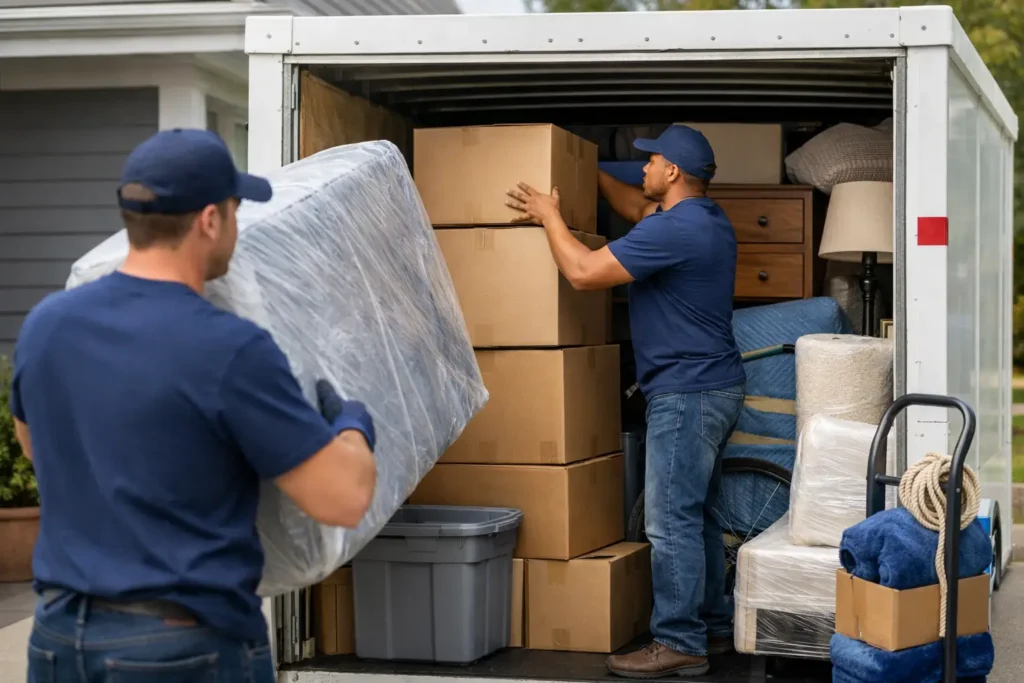
A moving pod can save you a lot of hassle – until you start loading it and realize every bad packing decision shows up fast. The way you stack a pod affects how much fits, how safely your stuff travels, and how hard unloading will be later. If you are figuring out how to load a moving pod, the goal is simple: protect your belongings, use the space well, and avoid the kind of shifting that turns a smooth move into a mess.
For apartment renters, students, and families trying to keep costs down, pods make a lot of sense. You load on your schedule, skip the pressure of driving a big truck, and usually get more flexibility for long-distance or storage-friendly moves. But pods also reward good planning. Unlike tossing a few things into the back of an SUV, this is more like building a stable wall one layer at a time.
Quick answer: loading a moving POD
A moving POD should be loaded in tight sections with balanced weight, protected furniture, and fragile items away from pressure.
- Best fit: POD loads, storage containers, apartment moves, and long-distance moves.
- What you handle: the truck, trailer, POD, storage unit, building access, parking details, and anything you want packed before the crew arrives.
- What College Movers handles: the lifting, loading, unloading, carrying, and heavy-item work that makes move day harder than it needs to be.
How to load a moving pod without wasting space
Start before the pod even arrives. If you wait until loading day to decide what goes where, you will lose time and probably leave space unused. Group your belongings by weight and size first. Put boxes together by room, separate heavy boxes from lighter ones, and take apart large furniture as much as possible.
The basic rule is to load the heaviest items first and place them against the back wall of the pod. That usually means appliances, solid wood furniture, dressers, book boxes, and anything dense. Once those anchor pieces are in place, build outward with medium-weight boxes and lighter items on top.
Think of the pod like a small storage unit that will move. You are not just filling empty space. You are building a compact, balanced load that can handle transport without tipping, sliding, or crushing what is underneath.
Start with a flat, stable base
A bad base causes problems all the way up the stack. Set heavy boxes and furniture pieces on the floor first, keeping weight distributed evenly from side to side. If one side gets much heavier than the other, the load can shift and become harder to secure.
Boxes work best when they are packed full and taped well. Half-empty boxes collapse under pressure, even if they seem fine in your living room. If a box has soft items inside, use them as cushion, not as support in the bottom layer.
Mattresses can help protect large surfaces, but they should not be the first thing loaded unless they are standing along the wall and tied in tightly. A mattress laid flat too early often wastes valuable floor space.
Build in tiers, not random piles
The most efficient pod loads look almost like brickwork. Place similar-size boxes together, keep rows tight, and avoid leaving gaps between pieces. Small empty spaces may not seem like a big deal at first, but they add up quickly and let items move during transport.
If you have awkward items like floor lamps, vacuum cleaners, or folding chairs, use them to fill narrow spaces after the main structure is built. Do not let these odd-shaped pieces dictate the whole layout.
This is where people often get tripped up. They load by convenience instead of strategy, putting in whatever is closest to the door. That usually leads to wasted room near the ceiling and fragile items wedged into bad spots at the end.
The best order for loading furniture and boxes
If you want a practical sequence, load large and heavy items first, then sturdy boxes, then lighter boxes, then soft goods and fragile pieces. That order keeps pressure where it belongs and gives you better control over the shape of the load.
Dressers, desks, bed frames, and tables should be disassembled when possible. Remove legs, shelves, and glass components. Wrap surfaces with moving blankets or pads to reduce scratching. If drawers are packed with light items like linens, some furniture can stay partially loaded, but anything too heavy becomes harder to carry safely and more likely to break.
Stand couches on end only if that saves real space and the piece can be secured well. Sometimes it helps. Sometimes it creates a bulky, unstable section that is harder to build around. It depends on the shape of the pod and the rest of your load.
Boxes should go in by weight. Heavy boxes on the bottom, lighter ones on top. Labeling matters here, but not just for unpacking. If you clearly mark fragile, heavy, and load last items, whoever is helping can move faster and make better decisions.
Keep fragile items for the right moment
Fragile items should usually go in later, not first. Mirrors, lampshades, electronics, framed art, and carefully packed kitchen boxes need stable surroundings. They should rest on top of heavier sections or in protected vertical spaces where they will not get pinned under shifting weight.
If you are moving TVs or monitors, keep them upright if possible and cushion them well. Original boxes are great if you still have them, but a snug box with padding can also work. Just do not slide screens between heavy furniture and hope for the best.
How to keep a moving pod from shifting in transit
A full pod is usually safer than a half-full one because there is less room for movement. The challenge is making everything tight without cramming delicate items into high-pressure spots.
Use straps or rope to secure tiers as you go, especially after each major section. Many pods have tie-down points for exactly this reason. Take advantage of them. A quick strap across a row of furniture and boxes can prevent a lot of movement on the road.
Soft items are useful here. Bags of clothes, cushions, blankets, and towels can fill gaps and act as buffers. Just do not rely on soft items to hold up heavy weight. They are fillers, not foundations.
You should also avoid creating a tall load near the front with open space behind it. That setup invites shifting. Try to keep the load even and continuous from floor to ceiling, with the heaviest concentration low and toward the back.
Watch the small mistakes that cause big damage
Most damage during pod moves comes from a few common errors. People leave empty gaps between boxes, stack heavy items on weak cartons, fail to secure vertical furniture, or load fragile items too early. Another common problem is rushing the last 20 percent of the job. Once people get tired, the final section near the door often becomes a loose collection of random items rather than a solid finish.
That last section matters. You want the front of the pod to be just as stable as the back. If there is leftover room, fill it intentionally with light but sturdy items, then secure the final row so nothing shifts when the door closes and the pod starts moving.
Should you hire help to load a moving pod?
If you have a pod but not the time, energy, or confidence to load it well, labor-only help can make a big difference. This is especially true for second-floor apartments, student housing, tight hallways, or long-distance moves where one bad packing choice can cost you later.
A lot of people already have the container and just need the muscle and know-how to load it efficiently. That is where College Movers fits naturally. Instead of paying for a full-service move you do not need, you can hire hardworking local student movers to handle the lifting and loading at $50 per hour per mover. It is a practical option for people in places like Phoenix, Salt Lake City, or Austin who want affordable help without hidden fees or a drawn-out quote process.
Good loading help is not just about strength. It is about pace, stacking judgment, and protecting your furniture while keeping the load tight. When movers know how to build a pod correctly, you usually fit more inside and deal with fewer problems at the other end.
How to load a moving pod for apartments and small homes
Apartment moves come with their own challenges. Elevators run slowly, stairwells eat up time, and parking can be tight. In smaller homes or apartments, the temptation is to bring items out one at a time and load on the fly. A little staging goes a long way.
If possible, set aside one area for boxes, one for furniture, and one for fragile items before loading starts. That gives you a cleaner workflow and helps the strongest pieces go in first. For college students or young professionals doing a quick lease-to-lease move, this can be the difference between a smooth two-hour load and a long, frustrating day.
If you are booking labor in a busy market, timing matters too. Weekend moves fill up quickly in cities with lots of apartment turnover, including places like Seattle and Las Vegas. Planning ahead gives you a better shot at getting help when you want it.
A few items should stay with you
Do not load medications, important documents, chargers you need right away, passports, basic tools, or a first-night bag into the pod. Keep those with you. The same goes for valuables and anything extremely temperature-sensitive.
A pod is great for furniture, clothing, household goods, and most boxed items. It is not the best place for the things you absolutely cannot risk losing access to.
If you want your pod loaded quickly, safely, and without the usual guesswork, College Movers can help with the heavy lifting. Our student movers handle loading, unloading, apartment moves, and labor-only moving at $50 per hour per mover, with straightforward pricing and no hidden fees.
The best pod loads are not fancy. They are balanced, tight, and planned just enough to save you from broken items and wasted space later.
What to expect when you book College Movers
College Movers is built around a simple labor-only model. You stay in control of the transportation and timing, and our local student movers help with the physical work. That means you are not paying for a full-service moving package when what you really need is capable help with the heavy lifting.
For loading a moving POD, the biggest time-savers are usually preparation, access, and crew size. Have small items packed, walkways clear, elevators or loading areas reserved when needed, and a short list of heavy pieces that need the most attention.
Pricing starts at $50 per hour per mover with a simple two-hour minimum, so it is easier to plan the budget before move day.
Schedule moving help online once your date, access, and truck or storage plan are ready.
Frequently asked questions about loading a moving POD
Do I need to provide my own truck or container?
Yes. College Movers is a labor-only moving option, so you provide the truck, trailer, POD, storage unit, or other transportation. The crew provides the muscle for loading, unloading, stairs, heavy furniture, and move-day labor.
What can the movers help with?
The crew can help with loading, unloading, carrying heavy furniture, moving items through stairs or elevators, rearranging furniture, and making the truck or storage space work more efficiently.
How can I keep the job affordable?
Pack small items before the crew arrives, clear walkways, group boxes by room, and make sure parking or building access is ready. The more prepared the space is, the more of the paid time goes toward the heavy lifting.
Is this a good option for small moves?
Yes. Labor-only help is often a strong fit for small moves because you can book the muscle you need without paying for a traditional full-service moving package.
How much does College Movers cost?
College Movers starts at $50 per hour per mover with a simple two-hour minimum. You can compare details on the pricing page before booking.
Ready to make the heavy part easier?
College Movers keeps moving help simple: you provide the truck, trailer, POD, or storage space, and our local student movers handle the loading, unloading, and heavy lifting. With straightforward hourly pricing and no full-service moving package to pay for, you can schedule the muscle you need and keep the day moving.
Simple plan: schedule your move, let the crew handle the heavy lifting, and relax knowing you saved your back while supporting local college students.
Schedule A Move or compare our simple hourly pricing.